
Selling a Home You've Owned for Years in North County? How Capital Gains Tax Works in California
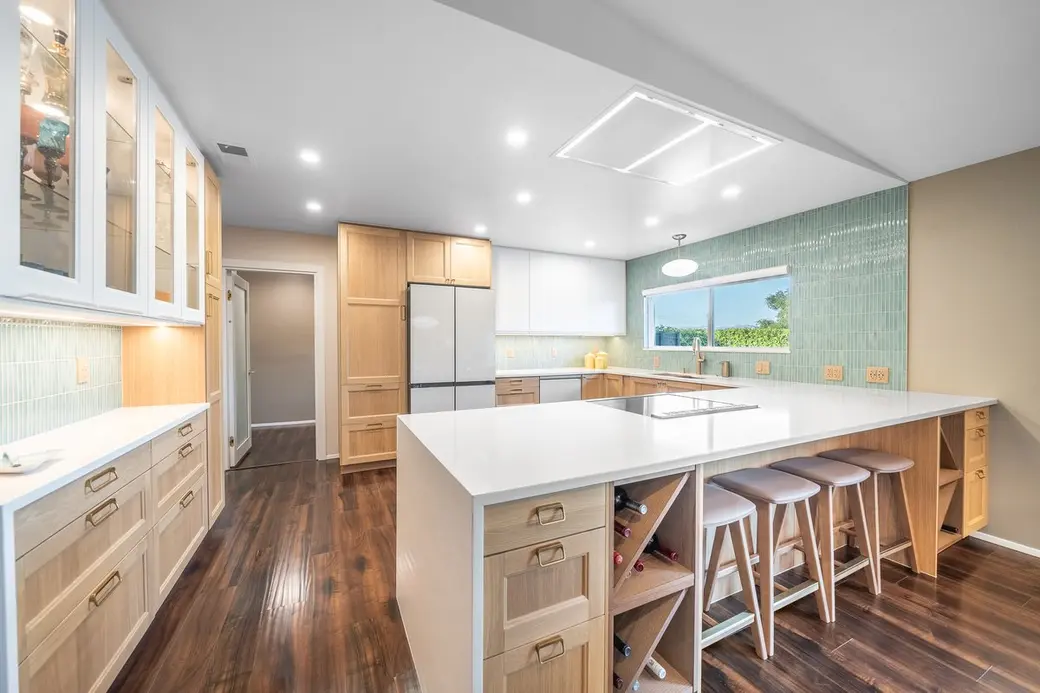
If you bought your North County home in the 1990s or 2000s, you may be sitting on a lot of equity. North County's median sales price was $1,022,900 in October 2026 (NSDCAR Marketwatch, October 2026). That's great news, until someone asks, "How much of that goes to taxes?"
I've been in real estate since 1999, and this question comes up with almost every long-time owner I meet. I'm not a tax advisor, so please bring your CPA into the conversation. But here are the basics, from the IRS and the California Franchise Tax Board, so you can walk in prepared.
The Home Sale Exclusion: $250,000 or $500,000
If you sell your main home at a gain, you may be able to exclude up to $250,000 of that gain from income, or up to $500,000 if you file jointly with your spouse (IRS Topic 701).
To qualify, you generally need to pass two tests during the five years before the sale:
- Ownership test: You owned the home for at least 2 years.
- Use test: You lived in it as your main home for at least 2 years.
The two years don't have to be the same two years. For married couples filing jointly, either spouse can meet the ownership test, but both must meet the use test. Generally, you can't use the exclusion if you used it on another home in the two years before the sale.
California follows these same rules. The FTB says it conforms to the IRS exclusion, and any gain over $250,000 (or $500,000 for married couples and registered domestic partners) is taxable (FTB, Income from the sale of your home).
How California Taxes the Gain Above the Exclusion
At the federal level, long-term gain above the exclusion is generally taxed at 0%, 15% or 20%, depending on your income (CNBC, Aug. 12, 2026). California has no lower capital gains rate. It taxes gains as regular income (FTB, Capital gains and losses).
Higher-income sellers may also owe the 3.8% Net Investment Income Tax. It can apply when modified adjusted gross income is above $250,000 for married couples filing jointly or $200,000 for single filers. The part of your gain that's excluded under the home sale rule is not subject to it (IRS Topic 559).
Your Gain Is Not Your Sale Price Minus What You Paid
This is where good records save real money. Your gain is roughly:
Sale price, minus selling costs, minus your adjusted basis.
- Selling costs can include the commission paid to the seller's agent and certain closing costs (IRS Publication 523).
- Your basis starts with what you paid, then goes up by the cost of improvements. The IRS lists examples like a bedroom or bathroom addition, a deck, landscaping, a driveway, a fence, a retaining wall, a swimming pool, a new heating system or central air.
- Repairs don't count on their own, like fixing a leak or repainting a room. But repairs done as part of a larger remodel can.
- If you got an energy credit for something like solar panels, you may need to subtract that credit from your basis.
Example (my own math, made-up numbers): A married couple bought in 1999 for $250,000 and spent $80,000 on documented improvements. They sell for $1,022,900 and pay $60,000 in selling costs.
| Step | Amount |
|---|---|
| Sale price | $1,022,900 |
| Minus selling costs | -$60,000 |
| Minus basis ($250,000 + $80,000) | -$330,000 |
| Gain | $632,900 |
| Minus joint exclusion | -$500,000 |
| Gain that may be taxable | $132,900 |
Without those improvement records, the taxable amount in this example would be $80,000 higher. Start gathering receipts, permits and contracts now.
Special Situations Worth Knowing
- Surviving spouses. If your spouse passed away, you may still qualify for the $500,000 exclusion if you sell within 2 years of their death, haven't remarried, and meet the other conditions in Publication 523.
- Community property. In California, when one spouse dies, community property can get a new basis equal to its full market value on the date of death, including the surviving spouse's half, if certain conditions are met (Publication 523). This can greatly reduce the gain. Talk to your CPA about how your title is held.
- Part of the home was a rental or office. Different rules can apply if you rented out the home or used part of it for business. Publication 523 explains how.
- Military and Foreign Service. If you were on qualified extended duty, you may be able to suspend the five-year test for up to 10 years (IRS Topic 701).
What Happens at Closing
California withholding. Escrow normally withholds 3 1/3% of the sale price for California taxes unless you qualify for an exemption. If the home was your principal residence under the same 2-out-of-5-year rules, you can claim the exemption on Form 593, which you give your escrow officer before closing (FTB Form 593 instructions; FTB real estate withholding).
Reporting. If you receive Form 1099-S, you must report the sale on your tax return even if the whole gain is excluded (IRS Topic 701).
Is Congress Changing the Exclusion?
The $250,000 and $500,000 limits haven't changed since 1997. Some bills in Congress would raise or remove them, and the White House has talked about the idea. CNBC reported in August 2026 that those bills remain in committee, and any change would need an act of Congress (CNBC, Aug. 12, 2026). For now, plan with the current rules.
Frequently Asked Questions
Do I pay capital gains tax when I sell my house in California? Only on gain above the exclusion, if you qualify. Most owners who lived in the home for 2 of the last 5 years can exclude up to $250,000, or $500,000 for married couples filing jointly.
Does California have its own home sale exclusion? California follows the federal exclusion, but it taxes any gain above the exclusion as regular income.
Does the exclusion apply to a rental or second home? No. The exclusion is for your main home, and you can only have one main home at a time (FTB). Ask your CPA about the rules for rental or investment property.
What records should I keep? Your purchase closing statement, receipts and contracts for improvements, permits, and your sale closing statement.
Will escrow take money out for taxes? Escrow normally withholds 3 1/3% for California unless you qualify for an exemption on Form 593, such as the principal residence exemption.
Thinking About Selling After Many Years?
I can give you a realistic value for your home and a seller net sheet, so you and your CPA can run the numbers before you decide. Call or text me at 760-521-4880.
Tax laws change, and every situation is different. This article is general information, not tax or legal advice. Please consult a CPA or tax attorney.
Eddie Lagunas, Broker Associate, eXp Realty | DRE #01273510 | 760-521-4880
Categories
Recent Posts